Fix Execution, Not Strategy: Forensic Performance Coaching for Traders
Evidence first guide for traders who spot setups but fail at execution. Forensic multi agent trade audits deliver a prioritized kill list, weekly metrics,...
Fix Execution, Not Strategy: Forensic Performance Coaching for Traders
Trading performance coaching works when the problem is execution and emotional control, not strategy. If you can identify setups but keep sizing wrong, hesitating, or revenge trading after a loss, a structured coaching engagement usually produces repeatable execution, fewer emotional errors, and measurable P&L improvement within weeks. A forensic approach uses multi-agent trade auditing that turns your history into a data set, then a prioritized action plan you can inspect before committing to anything larger.
TL;DR:
- Coaching is most effective for traders struggling with execution consistency and emotional regulation, especially after losses or revenge trading episodes.
- A typical program includes diagnostics, rule implementation, live practice, and accountability, with measurable improvements expected within weeks to months.
- Successful coaching requires proven trading experience, clear methodologies, measurable deliverables, and transparency, avoiding promises of guaranteed profits.
- Forensic trade analysis tools prioritize fixing high-impact behavioral errors over minor mistakes, producing faster account improvements.
- Pairing trade journals with structured review software offers a data-driven approach that can generate personalized, actionable kill lists to enhance performance.
Table of Contents
- What Trading Performance Coaching Actually Covers
- Who Actually Benefits From a Trading Coach?
- What Does a Real Coaching Engagement Look Like?
- How Do You Choose the Right Trading Coach?
- How Much Does Trading Performance Coaching Cost?
- Why Structured Trade Forensics Beats Generic Advice
- Why I Trust Forensic Coaching Over Generic Psychology
- How The Final Tape Supports Your Coaching Process
- Sources
- FAQ
What Trading Performance Coaching Actually Covers
Good coaching splits into four working areas, and most programs move through all of them in sequence rather than picking one and stopping.
- State management. Techniques like affect labeling (naming the emotion you’re feeling before you act on it) reduce the physiological hijack that turns a normal loss into a revenge trade.
- Execution rules. Pre-market routines, hard entry and exit criteria, and stop and size discipline that don’t bend mid-session.
- Forensic trade review. Equity-curve analysis paired with ranked error lists, so the coach (or the software) can point to which three mistakes cost the most money, not the twelve that merely happened most often.
- Simulation-to-live progression. Moving from simulator practice into micro-sized real positions before scaling, since a simulator builds mechanics but not the emotional load of real risk.
The output of a real engagement is never vague encouragement. You should walk away with a written action plan, a prioritized “kill list” of behaviors to eliminate first, and a short set of metrics to track weekly. Anything less is motivational talk dressed up as coaching. Trading psychology research consistently ties the underlying behavioral issues, loss aversion, overconfidence, and revenge trading, to poor journaling and inconsistent risk management, which is exactly where structured coaching intervenes.
Who Actually Benefits From a Trading Coach?
Coaching helps most when the gap is between what you know and what you do under pressure.
- Traders who can spot setups but fail in execution. They see the trade, then hesitate, oversize, or exit early out of fear.
- Funded traders who pass evaluations but can’t hold live accounts. The skill exists; the account-level discipline doesn’t survive real money.
- Traders who journal religiously but never change behavior. They have the data. Nobody is helping them read it correctly.
Coaching is premature for complete beginners who haven’t built a repeatable process yet. Before hiring anyone, check three things yourself: how long your consistency windows actually run, whether your equity curve trends or just oscillates, and how often revenge trades follow a loss. If revenge trades show up more than occasionally, that’s a coaching-ready signal, not a strategy problem.
What Does a Real Coaching Engagement Look Like?
Most credible programs, whether delivered by a human coach or supported by analytics software, follow a similar arc from diagnosis to accountability.
- Diagnostic audit. The coach or platform reviews your journal and equity curve to establish baseline metrics: win rate, average loss size, drawdown depth, and error frequency.
- System design. You install what amounts to an Execution Operating System, a fixed set of rules paired with implementation intentions, the “if this happens, then I do this” plans that automate your response to known triggers instead of leaving it to willpower.
- Practice under real conditions. Live trade reviews, scheduled live-trading days, or a gradual scale from micro positions to full size.
- Accountability. Regular check-ins, metric thresholds that trigger a review, and cool-off rules that force a pause after a defined loss streak.
Timelines vary, but a realistic engagement shows measurable improvement checkpoints typically within a few weeks to a few months, such as fewer rule violations, reduced drawdowns, and a smoother equity curve.
Pro Tip: Track one execution metric daily, not five. Rule adherence percentage alone will tell you more about progress than a dozen scattered stats you’ll stop updating by week two.
How Do You Choose the Right Trading Coach?
Separating a credible coach from a confident talker comes down to what they can show you, not what they promise.
- Real trading experience. Ask for specifics, not a highlight reel.
- A documented methodology. If they can’t describe the framework in one paragraph, they don’t have one.
- Measurable deliverables. A written plan, a kill list, and metrics, not just weekly calls.
- Responsiveness and access model. Know exactly how and when you can reach them before you pay.
- Evidence of results. Anonymized before-and-after metrics, not testimonials alone.
Red flags include guaranteed profit percentages, no willingness to review your actual trades, and excessive secrecy around their own methods. On a discovery call, ask directly: What’s your trading background? Can I see a sample deliverable? How do you measure my progress? How often do we communicate? Is there a trial period or guarantee? What are the exit conditions if this isn’t working? Before signing anything, check public trust signals like a business profile or complaint history the same way you’d vet any financial service.
How Much Does Trading Performance Coaching Cost?
Pricing runs across a few common structures: per-session fees, 6 to 12 week programs, monthly retainers, and application-based mentorships that cap client load to protect quality. Lower tiers tend to buy generic feedback; higher tiers should buy documented plans, tracked metrics, and direct accountability.
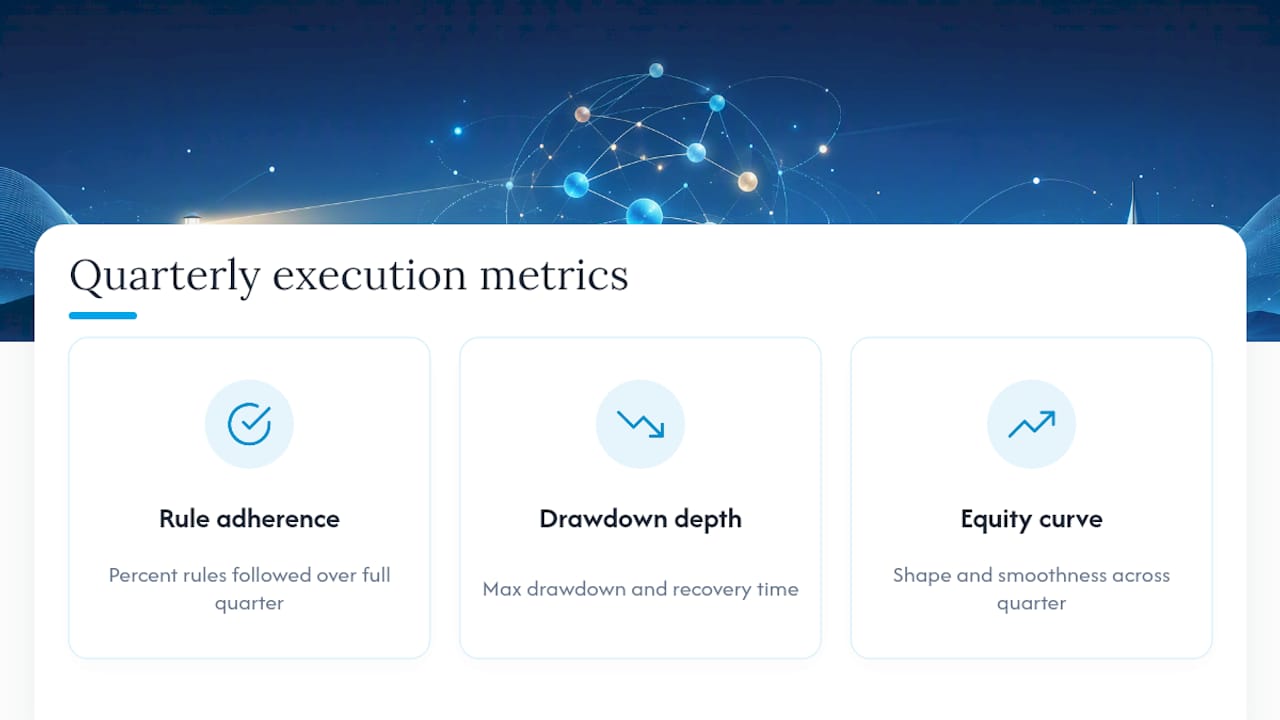
The real ROI question isn’t “did I make more money this month.” It’s whether your execution metrics moved: rule adherence, drawdown depth, and equity-curve shape over a full quarter, not a lucky week. Some programs deliberately limit cohort size to keep feedback personalized, which affects both price and availability.
Before committing to a longer program, request a short diagnostic or low-commitment trial. A coach or platform unwilling to show you a sample analysis first is asking you to buy blind.
Why Structured Trade Forensics Beats Generic Advice
Affect labeling, the act of naming an emotion before reacting to it, measurably changes brain activity. Research from UCLA links labeling emotions to reduced amygdala activation and increased engagement in the prefrontal cortex, the region responsible for regulated decision-making. In practice, that means pausing to say “I’m angry about that loss” before placing the next trade actually restores some control you’d otherwise lose to impulse.
Physiological resets work fast too. A controlled study on cyclic sighing found that short breathing sequences reduced physiological arousal and negative affect more effectively than several other breathing protocols tested, and traders can run the sequence between trades without leaving the screen.
Equity-curve review, rather than trade-by-trade micro-analysis, surfaces the handful of behavioral patterns that actually drive drawdown and expectancy. A ranked “kill list” of the highest-impact errors does more for performance than fixing every small mistake equally.
That’s the logic behind a forensic approach: multi-agent trade forensics that reconstruct your history into structured data, then rank errors by financial impact rather than frequency, so the fixes you make first are the ones that move your account, not just your mood.
Why I Trust Forensic Coaching Over Generic Psychology
Most trading psychology content treats every trader’s emotional problem as identical: fear, greed, discipline. It rarely is. The traders who actually change are the ones who can see, in numbers, which specific behavior cost them the most money, then get held to fixing that one thing before moving to the next.
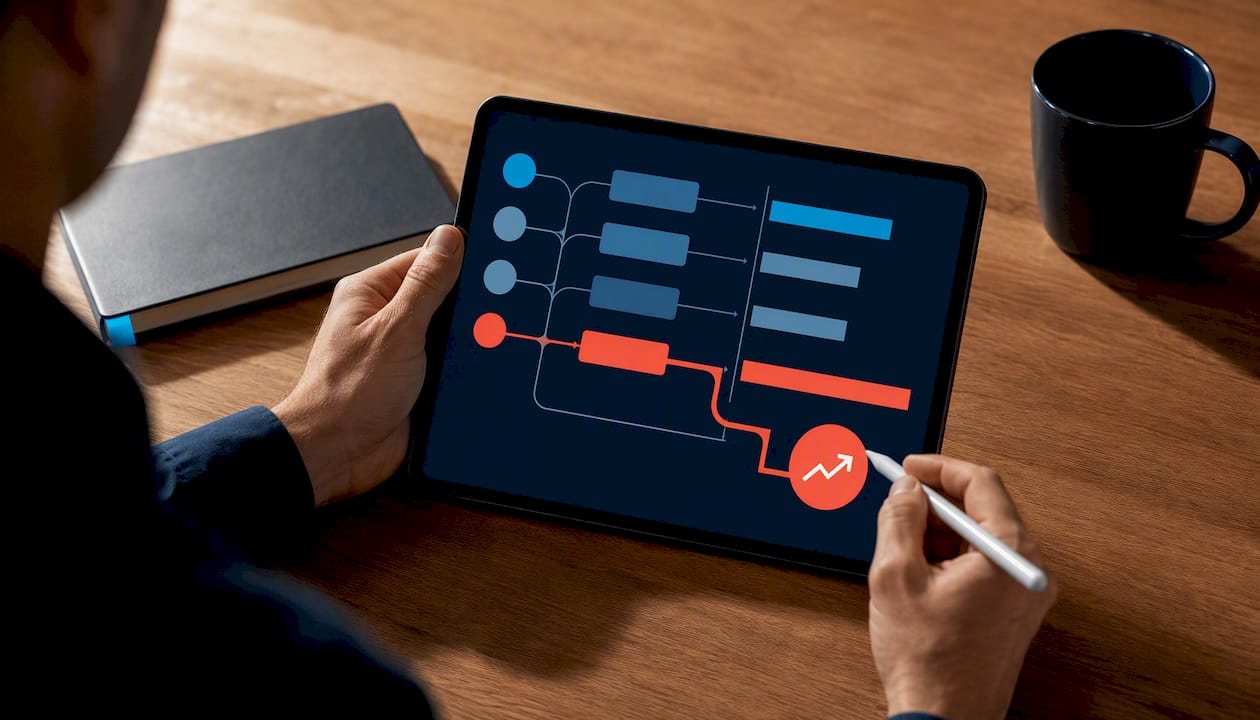
That’s why I favor structured, data driven coaching over generic mindset advice. A kill list built from your own equity curve carries more weight than a pep talk, because it can’t be argued with… .
The traders who improve fastest are rarely the ones who read the most. They’re the ones who get the clearest, most specific list of what to stop doing next.
— DigitalPunk
How The Final Tape Supports Your Coaching Process
The Final Tape isn’t a substitute for a human coach’s judgment. It’s the forensic layer most coaching relationships are missing: an AI Council that reconstructs your trades into structured data, debates the findings across specialist agents, and hands you a prioritized kill list with quantified financial impact instead of a vague list of “things to work on.”
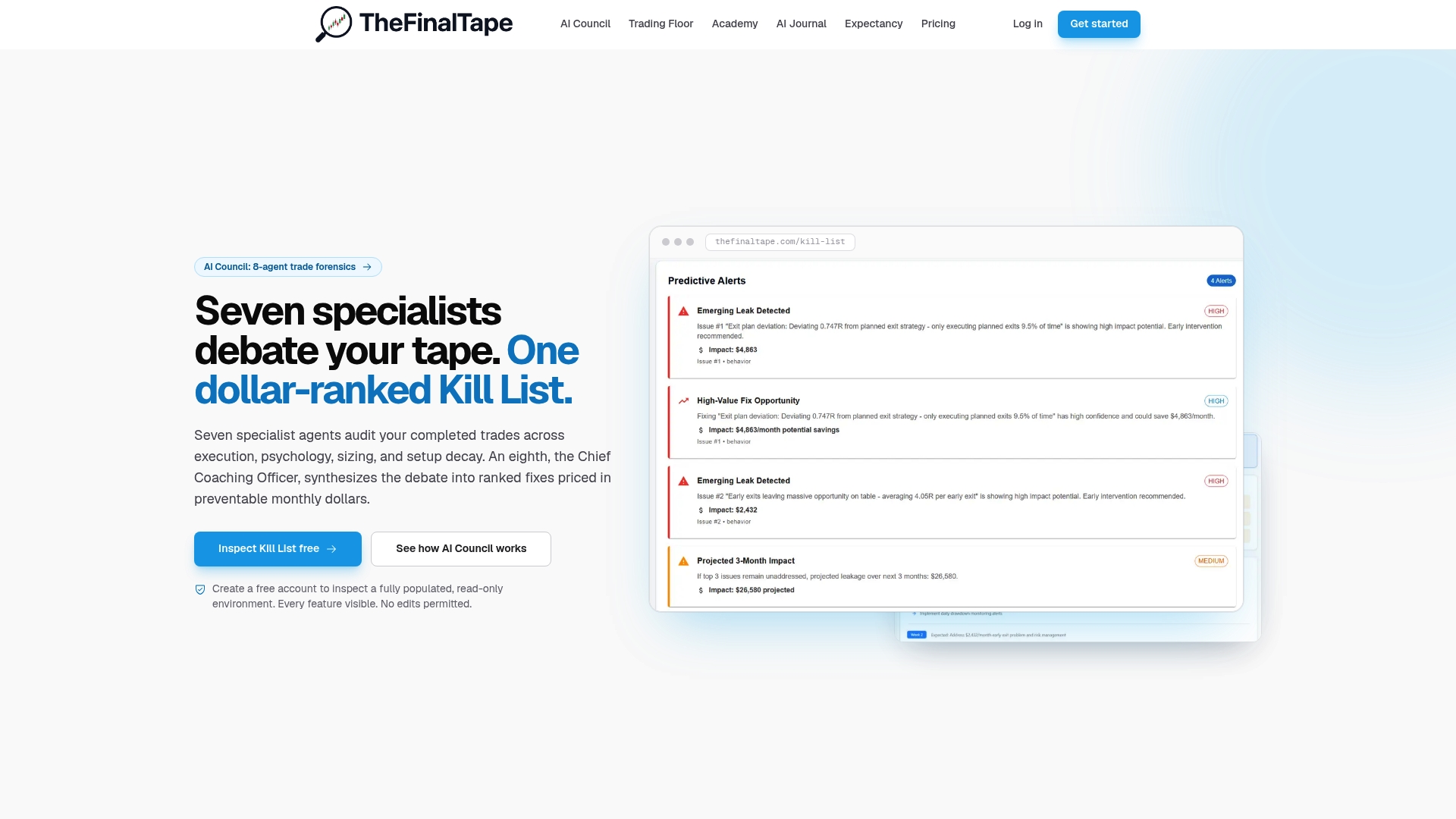
A discovery look at the platform shows you exactly what a sample report contains: ranked errors, equity-curve breakdowns, and setup-level performance attribution, before you commit to anything. If you already keep a journal, pairing it with structured trade review software turns raw trade history into the same kind of prioritized action plan a strong coach would build manually, just faster and with more data behind every recommendation. Start with a free inspection of the trading journal and analytics solutions and see your own kill list before you decide what to fix first.
Sources
For deeper reading on the science behind these techniques, see the UCLA research on affect labeling and the Investopedia overview of trading psychology. For journaling structure, review how to build a trading journal.
- Putting feelings into words (research overview via MIT mirror)
- How to control your emotions while trading (practitioner summary citing neuroscience research)
- TradingSim — Trading psychology: practice, simulation, and how to scale into real trading
- Investopedia — Trading psychology overview
- BBB profile for a performance coaching provider
FAQ
How much does a trading coach cost?
Pricing varies widely by format: per-session fees, 6 to 12 week programs, monthly retainers, and application-based mentorships that limit client load. Expect the lowest tiers to offer general feedback, while higher tiers include documented plans and tracked accountability metrics.
Can I make $1,000 a day day trading?
Daily profit targets depend entirely on account size, risk tolerance, and consistency, not a fixed formula, and chasing a specific dollar target often causes the oversizing and revenge trading that coaching is meant to fix. A more reliable goal is consistent execution and controlled drawdown, since profit follows from those, not the other way around.
What is the 70/30 rule in coaching?
Definitions of this rule vary by coach and aren’t standardized across the industry, so treat any specific version you hear as that coach’s own framework rather than an established standard.
How much does a performance coach cost?
Performance coaching costs mirror trading-specific coaching: per-session rates, structured multi-week programs, or ongoing retainers, with price generally tracking how personalized and data backed the deliverables are. A short diagnostic or low-commitment trial before a larger commitment lets you judge the fit without full financial exposure.
What does trading performance coaching actually fix?
It targets execution and emotional control, hesitation, oversizing, revenge trading, and inconsistent rule following, rather than teaching new strategies. Forensic tools like The Final Tape’s AI Council support this by ranking your actual errors by financial impact.
Recommended
Stop reviewing from memory
Run compliance scoring, tag ranking, and Kill List rules on every trade — not once a month when the account feels off.